


Fleur-de-Lis Tummy Tuck in Turkey: Excess Skin Removal, Scars, Recovery and 360 Body Lift Options
What is a fleur-de-lis tummy tuck?
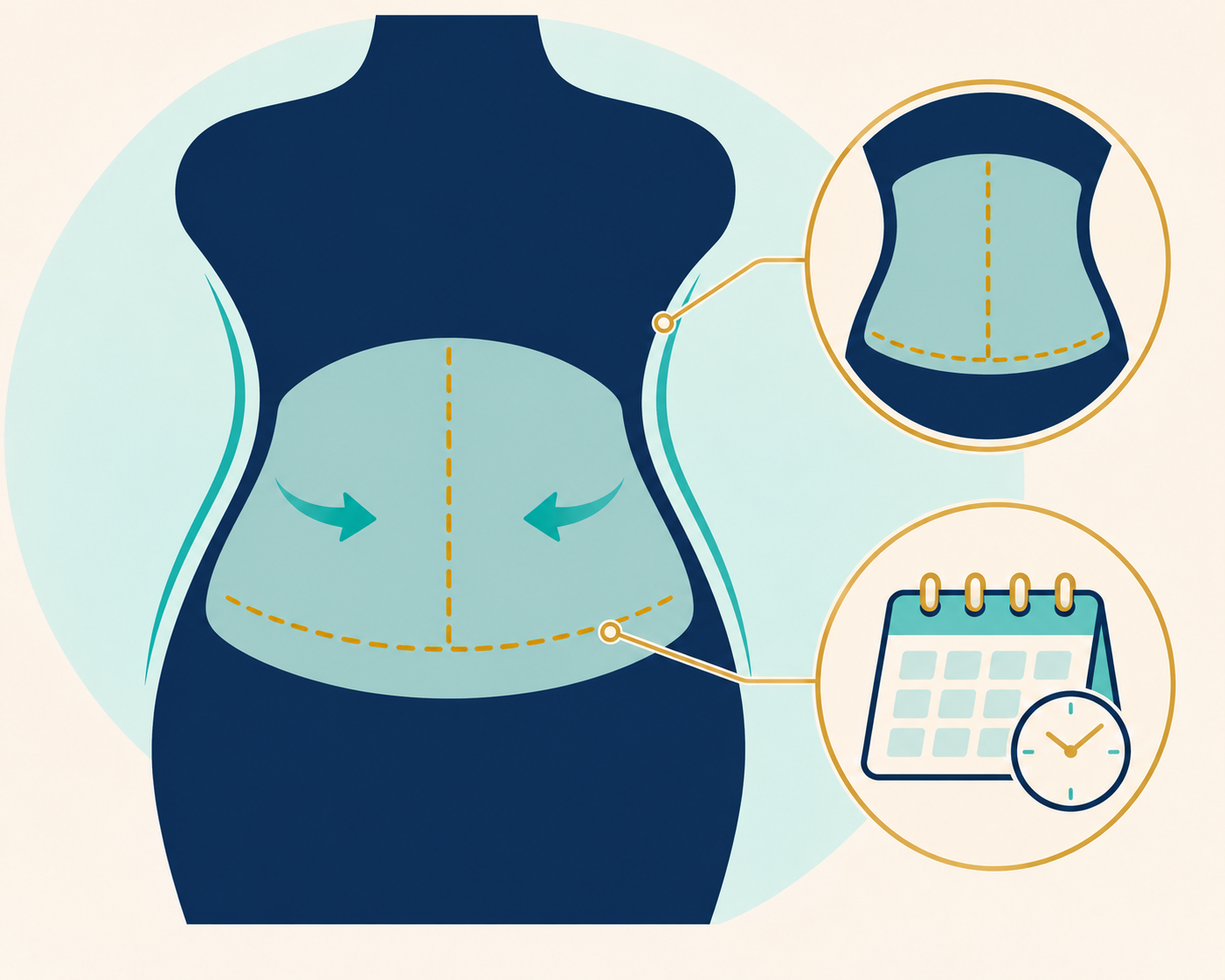
A fleur-de-lis tummy tuck removes excess abdominal skin in two directions. For this reason, it combines a low horizontal incision with a vertical incision along the centre of the abdomen. As a result, the surgeon can address loose skin both above and below the belly button, including excess across the abdomen’s width.
Surgeons also call this procedure fleur-de-lis abdominoplasty or an FDL tummy tuck. They may recommend it after major weight loss because a standard tummy tuck could leave significant loose skin.
If you are considering a fleur-de-lis tummy tuck in Turkey, understanding the scar pattern helps you weigh the options. In addition, this guide explains how the procedure relates to a 360 body lift and recovery planning in Istanbul.
Why might a standard tummy tuck leave loose skin?
A standard tummy tuck removes excess skin through a low horizontal incision. The surgeon then brings the remaining skin downwards. Therefore, this approach mainly corrects excess skin in the up-and-down direction.
However, major weight loss can also leave loose skin across the width of the abdomen. As a result, pulling the skin down alone may leave folds in the upper and central tummy.
The vertical skin removal in a fleur-de-lis tummy tuck lets the surgeon bring skin inwards from the sides. As a result, it adds correction across the abdomen’s width.
Therefore, the extra scar has a purpose when you need this additional correction. However, if a standard approach can address your skin excess, a long vertical scar may offer little benefit.
Fleur-de-lis tummy tuck vs 360 body lift
Fleur-de-lis describes a pattern of abdominal skin removal. In contrast, a 360 lower body lift treats excess tissue around the lower torso, including the sides and lower back. Although they overlap at the abdomen, the procedures cover different areas.
| Procedure | Main treatment area | Typical scars |
|---|---|---|
| Standard tummy tuck | Loose skin at the front of the abdomen | Low horizontal scar, usually with a navel scar |
| Extended tummy tuck | Abdominal skin excess continuing towards the sides | Longer horizontal scar towards the flanks, usually with a navel scar |
| Fleur-de-lis tummy tuck | Abdominal skin excess in both directions | Low horizontal and central vertical scars, usually with a navel scar |
| 360 lower body lift | Abdomen, waist and lower back; lifting of the buttocks and outer thighs depends on the plan | Scar around the lower torso; extra scars depend on the abdominal technique |
Can surgeons combine these procedures?
Yes. In selected patients, the surgeon can include a fleur-de-lis abdominal component within a 360 body lift. In this plan, the body lift also addresses the sides and back. Meanwhile, the vertical abdominal skin removal treats remaining excess at the front.
However, not every body lift needs this addition. An FDL tummy tuck alone does not remove excess back skin, so your consultation should clarify the treatment areas.
If you also want breast surgery, the surgeon must assess its timing separately. For example, your health and the overall surgical extent may favour separate operations.
Who is a candidate for a fleur-de-lis tummy tuck?
Surgeons consider this procedure for adults with substantial abdominal skin excess in both directions. For example, it may suit some people after bariatric surgery or other forms of major weight loss. However, the method of weight loss alone does not determine the technique.
A fleur-de-lis tummy tuck is not weight-loss surgery. Instead, it reshapes the abdomen by removing excess tissue after weight loss.
During your assessment, the surgeon reviews:
- The amount, location and movement of loose skin.
- Your weight stability and plans for further weight loss.
- Your general health, body mass index and healing risks.
- Smoking, nicotine use and current medicines.
- Previous operations, existing scars and abdominal wall concerns.
- Your expectations about scars and time available for recovery.
Weight stability and nutrition before surgery
Surgeons commonly discuss three to six months at a stable weight before body-contouring surgery. However, a time target alone does not establish readiness. In addition, your health, nutrition and plans for further weight loss affect the timing.
The team also reviews protein intake and may check for nutritional deficiencies after bariatric surgery. For example, test results may show a deficiency that needs treatment before surgery. As a result, the team can address nutritional concerns before you begin recovery.
Also share your full medication list, including weight-management medicines and supplements. Then ask your surgical and anaesthetic teams whether you need any changes.
How does fleur-de-lis tummy tuck surgery work?
First, the surgeon marks the areas of skin removal and the planned scar positions. The operation usually takes place under general anaesthesia.
Next, the surgeon removes excess skin and associated fatty tissue. They then reshape and close the remaining skin in two directions. The belly button also usually needs a new opening in the repositioned skin, which leaves a scar around it.
Muscle repair, liposuction and drains
Loose skin and separation of the abdominal muscles are different findings. If you have muscle separation, known as diastasis recti, the surgeon may also repair the supporting tissue with stitches. However, the vertical skin incision does not automatically mean you need this repair.
Liposuction can treat selected areas of fat. However, it cannot replace the removal of substantial hanging skin. The surgeon therefore considers tissue blood supply and the overall extent of surgery before combining treatments.
The team also decides whether you need drains or a compression garment. Therefore, your care instructions should explain how to manage these during recovery.
Fleur-de-lis tummy tuck scars: location and healing
The operation usually leaves a low horizontal scar and a vertical scar along the centre of the abdomen. Together, these form an inverted-T pattern. The vertical scar’s length also depends on the amount and location of excess skin.
Although underwear may cover the lower scar, the vertical scar remains visible when clothing exposes your abdomen. You should therefore discuss scar placement before deciding on surgery.
Early scars can look red, firm or raised. Over time, their colour and texture may improve. Scar maturation often takes 12–18 months, sometimes longer, but the scars remain permanent.
How should you care for the scars?
Your surgeon may recommend scar treatments after the wounds have fully closed. For example, these may include silicone gel or sheets. They may also advise sun protection and follow-up for raised or uncomfortable scars.
However, you should not start scar products on open wounds. Ask the team when to begin each treatment, because healing progresses at a different pace for each patient.
Fleur-de-lis tummy tuck recovery timeline
You can expect swelling, tightness, discomfort and limited movement early in recovery. Meanwhile, the team will guide you on gentle walking, wound care and follow-up visits. You can then increase activity gradually as healing allows.
| Stage | What to plan for |
|---|---|
| First 1–2 weeks | Wound checks, drain reviews if needed, short walks and help with daily tasks. |
| Around 4–6 weeks | Plan for several weeks away from work. However, your surgeon may allow light duties earlier if healing permits. |
| Around 6–8 weeks and beyond | Your surgeon may gradually ease exercise and lifting restrictions after reviewing your wounds and any muscle repair. |
| Following months | Swelling continues to settle. Meanwhile, the abdominal shape becomes clearer and scars continue to mature. |
Returning to work, exercise and daily routines
These ranges provide a planning guide, not a fixed recovery schedule. For example, a combined body lift or delayed wound healing can extend the timeline. A physically demanding job may also require a longer break.
Returning to work, exercising and flying require separate decisions. Therefore, ask your surgeon to assess each activity individually. Also arrange help with childcare, shopping and luggage while lifting restrictions apply.
Fleur-de-lis tummy tuck risks and wound healing
Possible complications include bleeding, infection, fluid collections and wounds that separate or heal slowly. In addition, patients can develop skin or fat loss, altered sensation, prominent scars or uneven contours.
Your surgeon should also discuss anaesthetic complications and blood clots in the legs or lungs. Your health, previous operations and the planned procedure also affect personal risk. Therefore, a general recovery guide cannot predict your individual outcome.
Why does the T-junction need attention?
The T-junction is the point where the horizontal and vertical incisions meet. Because tension and reduced blood supply can affect this area, healing may take longer. For this reason, the team pays close attention to it during planning and wound checks.
Smoking, nicotine use and some medical conditions can also affect healing. Discuss these factors openly, because the surgeon may need to adjust or postpone your plan.
Which symptoms need urgent medical attention?
Seek emergency help for sudden breathlessness or chest pain after surgery. New swelling in one leg also needs urgent medical assessment. In addition, contact your surgical team promptly for fever, spreading redness or wound discharge.
Planning a fleur-de-lis tummy tuck in Turkey
Before travelling to Istanbul, share your weight history, previous operation reports and medication list with the clinic. In addition, a remote consultation can help with initial planning. However, an in-person examination and any necessary tests establish the final surgical plan.
If you are exploring post-bariatric surgery in Turkey, explain your weight-loss history and any ongoing nutritional treatment. Also clarify whether your concerns involve only the abdomen or extend around the waist and back.
How long should you stay in Istanbul?
Your stay should allow time for surgery, early wound checks and an assessment before departure. However, the required duration varies with the operation and your progress.
Hospital discharge does not automatically mean you are fit to fly. This distinction matters because major surgery and prolonged travel can increase blood-clot risk. Therefore, agree your return journey with the surgeon before confirming travel arrangements.
For practical preparation, read our Body Lift Travel Checklist for Turkey. It also covers records, accommodation and follow-up planning.
Follow-up and costs after you return home
Before leaving Istanbul, confirm how the team will review your recovery. In addition, ask where you can obtain an in-person wound check if you need one.
- Confirm your follow-up schedule and contact details.
- Clarify who to contact for urgent concerns.
- Check whether the quote includes anaesthesia, hospital care and follow-up.
- Ask about garments, medicines and any extra appointments.
- Discuss the arrangements and costs for additional treatment if complications occur.
Therefore, a clear written plan helps you prepare. However, a fixed travel package cannot replace an individual assessment of recovery and fitness to fly.
Fleur-de-lis tummy tuck: frequently asked questions
Do I need to lose a specific amount of weight to qualify?
No single weight-loss threshold applies to everyone. Instead, the surgeon assesses the remaining skin, weight stability and your overall health. In addition, your nutritional status helps determine whether surgery is appropriate.
Can liposuction help me avoid the vertical scar?
Liposuction removes fat, but it does not remove substantial loose skin. However, not every patient needs an FDL approach. Therefore, your surgeon should explain whether a standard or extended tummy tuck could address your concerns.
Can I have FDL surgery after a previous tummy tuck?
Some patients with remaining skin excess may benefit from another assessment. However, previous scars and tissue blood supply affect the available options. Bring your original operation report, because it can help the surgeon plan further treatment.
Are the results permanent?
The operation permanently removes the excised skin. However, ageing, pregnancy and weight changes can still affect the remaining tissues. Maintaining a stable weight therefore helps preserve the result.
Discuss your treatment plan in Istanbul
For an individual assessment, contact Dr. Emre Güvercin Clinic in Istanbul, Turkey. For example, you can discuss loose abdominal skin, scar placement and recovery needs.
If you are also considering a breast lift, read our guide to combined body lift and breast lift surgery. It also explains how health and surgical extent influence the choice between one operation and separate stages.
This guide provides general information. Your surgical team should confirm your individual treatment, recovery and travel plans after assessment.


