Eyelid Surgery (Blepharoplasty): Cosmetic Choice or Medical Necessity?
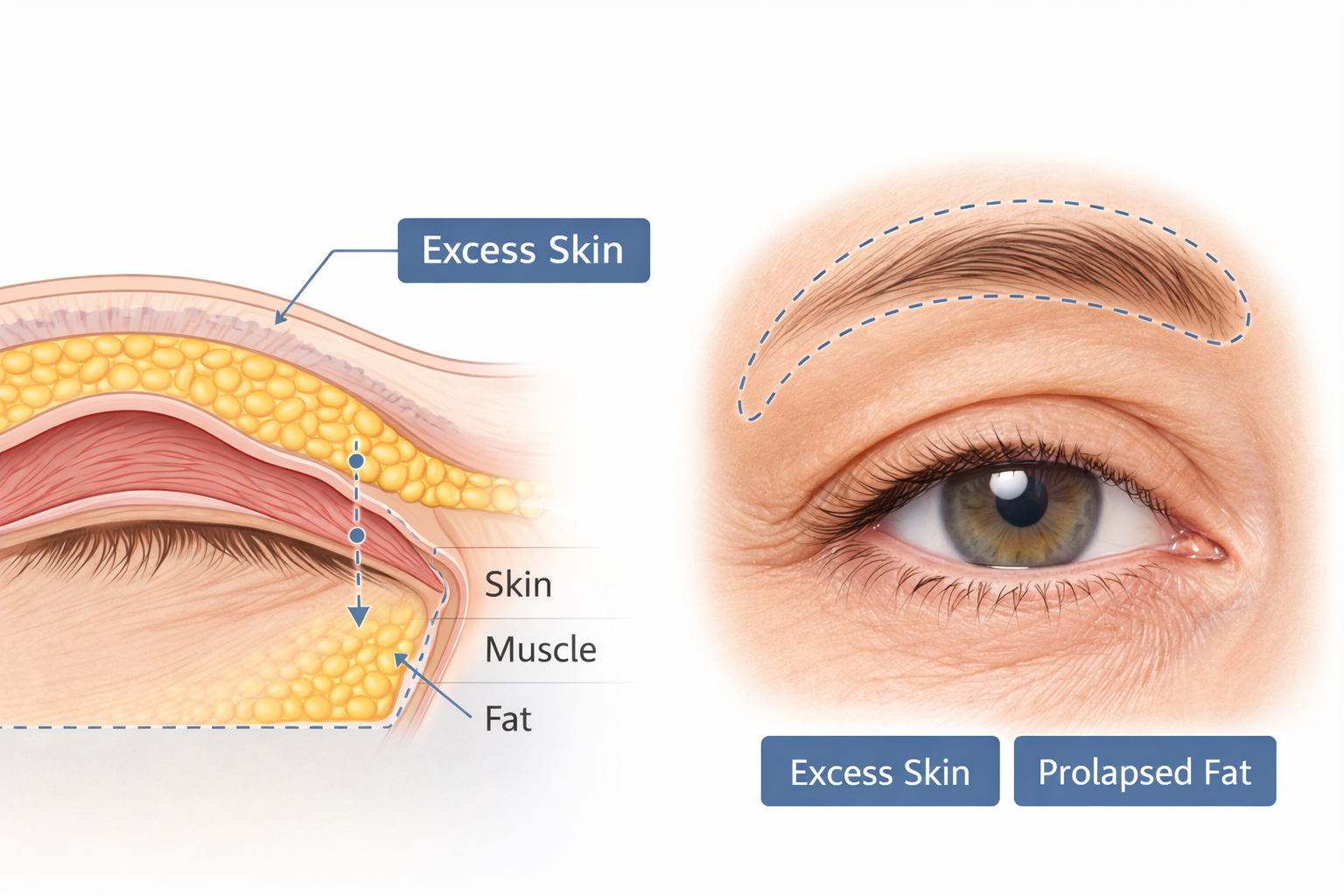
Eyelid surgery (blepharoplasty) aims to correct excess skin, fat protrusion, and tissue laxity affecting the upper and/or lower eyelids due to aging or genetics. While many patients seek a more refreshed look, if upper eyelid drooping narrows the visual field, the procedure may also provide functional (medical) benefit.
- What is eyelid surgery?
- Is it performed for cosmetic reasons?
- Can it be a medical necessity?
- When is upper eyelid surgery planned?
- Who is suitable for lower eyelid surgery?
- Blepharoplasty vs ptosis vs brow drooping
- Are results long-lasting?
- Recovery process
- Potential risks and points to consider
- Frequently asked questions
What Is Eyelid Surgery?
Eyelid surgery (blepharoplasty) is performed to surgically correct issues such as excess eyelid skin (dermatochalasis), prominent fat pads, and tissue laxity that may develop in the upper and/or lower eyelids over time. In suitable candidates, it helps create a more rested look. If advanced upper eyelid drooping affects the visual field, the plan can also target functional improvement.
- Correction of excess skin that creates a “hooded” upper eyelid appearance
- Reduction of under-eye bags / fat pads, or anatomical repositioning when appropriate
- A more balanced, refreshed eye area that stays harmonious with the face
Is Eyelid Surgery Performed for Cosmetic Reasons?
Yes. Many patients choose eyelid surgery to achieve a more youthful, energetic expression. Upper eyelid drooping and under-eye bags may contribute to a tired look, a more aged appearance, and sometimes the perception of asymmetry. In such cases, blepharoplasty is a key procedure that complements facial aesthetics while aiming for natural-looking results.
Can Eyelid Surgery Be a Medical Necessity?
In some patients, upper eyelid drooping may restrict the upper portion of vision. In these situations, the procedure may provide not only cosmetic improvement but also functional benefit. Functional assessment is based on clinical examination and, when needed, measurements such as visual field testing, guided by the physician’s planning.
- A feeling of narrowing in the upper visual field
- Eyelid heaviness and eye fatigue while reading/driving
- A sensation of weight around the eyes and end-of-day strain
- A habit of lifting the eyebrows to see better
In the literature, objective criteria may be discussed when anticipating functional benefit (for example, MRD1 measurement and upper visual field loss). These parameters are assessed by the physician depending on the case.
When Is Upper Eyelid Surgery Planned?
Upper eyelid surgery is planned individually after examination. Common reasons for consultation include:
- Eyelid skin descending toward the lash line (hooded appearance)
- Difficulty applying makeup or loss of the eyelid crease
- Eyes looking constantly tired or sleepy
- A sense of narrowing from above in the visual field
Who Is Suitable for Lower Eyelid Surgery?
Lower eyelid surgery may be considered for patients with under-eye bags, prominent fat pads, fine wrinkles, a more noticeable lid–cheek transition, and a tired expression. The surgical approach is individualized. Depending on anatomy, the plan may focus on preserving and repositioning fat, skin tightening, or internal (transconjunctival) techniques.
Blepharoplasty, Ptosis Surgery, or Brow Drooping?
A “droopy” look around the eyes is not always caused only by excess eyelid skin. Three conditions may overlap, and distinguishing them matters for correct planning:
- Blepharoplasty: Correction of excess skin/fat tissue.
- Ptosis (lid drooping): Drooping related to the eyelid lifting muscle/tendon; different surgical principles may be required.
- Brow drooping: A lowered brow can increase the appearance of upper eyelid excess; brow intervention may be needed in some patients.
Therefore, for patients considering eyelid surgery, the upper eyelid, brow position, and eyelid function should be assessed together to determine the most appropriate approach.
Are the Results Long-Lasting?
Results are generally long-lasting. However, because aging continues, some laxity may recur over the years. Even so, with proper planning, the eye area can appear noticeably more refreshed for a long time.
Recovery After Eyelid Surgery
Recovery varies depending on technique, skin characteristics, and individual healing. Mild swelling and bruising are common in the early period. Many patients see visible social recovery within 1–2 weeks, while full tissue settling may take longer.
- First days: Swelling/bruising, tenderness, a sensation of fullness around the eyes
- 5–7 days: Sutures may be removed (as determined by your physician)
- 7–14 days: Bruising decreases significantly, return to daily life accelerates
- Weeks–months: Gradual reduction of swelling and stabilization of tissues
Potential Risks and When Should You Contact Your Doctor?
As with any surgical procedure, blepharoplasty carries potential risks. Proper evaluation, surgical planning, and following postoperative instructions are important to reduce these risks.
- Severe, increasing pain
- Sudden decrease in vision / marked increase in double vision
- Uncontrolled bleeding
- Progressive, one-sided excessive swelling
If you experience concerning symptoms, the best approach is to contact the team following your case directly.
Frequently Asked Questions
At what age can eyelid surgery be performed?
There is no strict age limit. Symptom severity, eyelid anatomy, and overall health are the key factors. With genetic predisposition, under-eye bags may appear at a younger age.
Does blepharoplasty completely eliminate dark circles?
The cause of dark circles matters. If shadowing from fat pads is significant, improvement may be seen. However, pigment-related dark circles, vascular factors, or thin skin may require additional/alternative methods.
If the upper eyelid droops, is blepharoplasty always sufficient?
Not always. If brow drooping or ptosis accompanies the problem, the plan may need to change. The correct approach is to differentiate these conditions during examination.
When can I return to work?
This depends on work intensity and individual healing. Many people recover socially within 1–2 weeks. Your physician’s guidance is decisive for heavy exercise and demanding activities.
The results of any surgical or interventional procedure may vary from person to person. A detailed evaluation by your physician is recommended before the procedure.